
OPIS: Modest Claims Could Unlock Private Finance, Ekos CEO Says at Mongolia COP17
OPIS has reported on Ekos CEO and founder Sean Weaver’s remarks at UNCCD COP17 — the UN’s land and desertification summit, held in Ulaanbaatar, Mongolia from August 17–28, 2026 — where nature finance and rangeland restoration were high on the agenda.
Finance was one of the defining themes of the talks. Citing UNCCD data, OPIS reported that the world needs roughly $355 billion a year through 2030 to meet land restoration targets and address degradation, desertification and drought — against current investment of about $77 billion a year, leaving an annual gap near $278 billion. The private sector currently supplies only around 6% of global finance for land restoration and drought resilience.
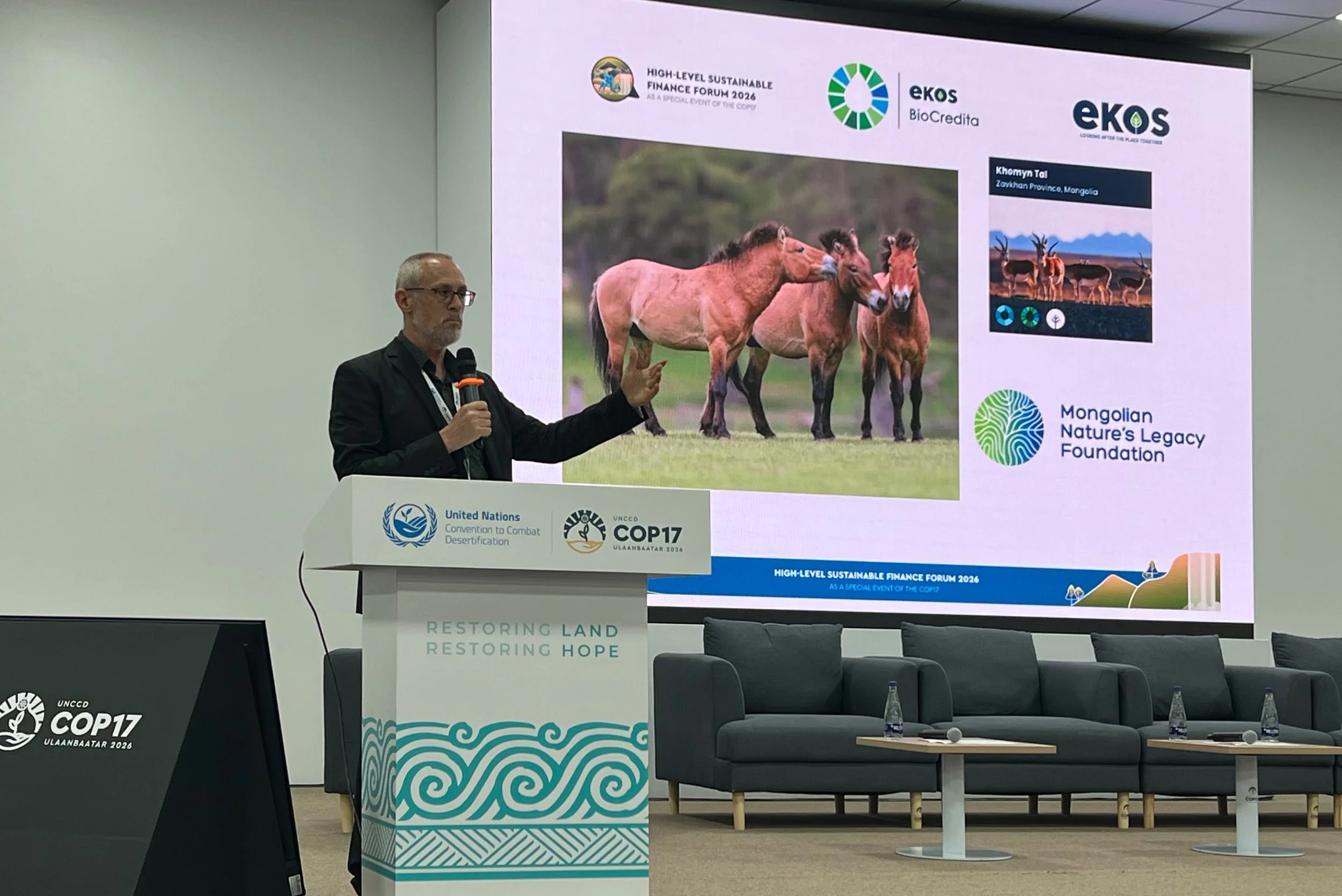
Ekos CEO Sean Weaver presents at the High-Level Sustainable Finance Forum 2026, a special event of UNCCD COP17 in Ulaanbaatar, featuring Ekos's BioCredita project at Khomyn Tal, Zavkhan Province.
Speaking with OPIS, Sean argued that closing that gap doesn’t need sweeping claims from buyers — modest ones will do more to get deals moving. He calls it the “margin of cool”: small, voluntary contributions layered onto everyday purchases, such as a barely-noticeable markup on cashmere products tied to steppe restoration, that add up to meaningful funding at scale.
He also spoke about where carbon markets fit and where they don’t — arguing that not every conservation goal belongs on a carbon market, which is part of why dedicated biodiversity markets, built specifically for nature outcomes, are gaining ground.
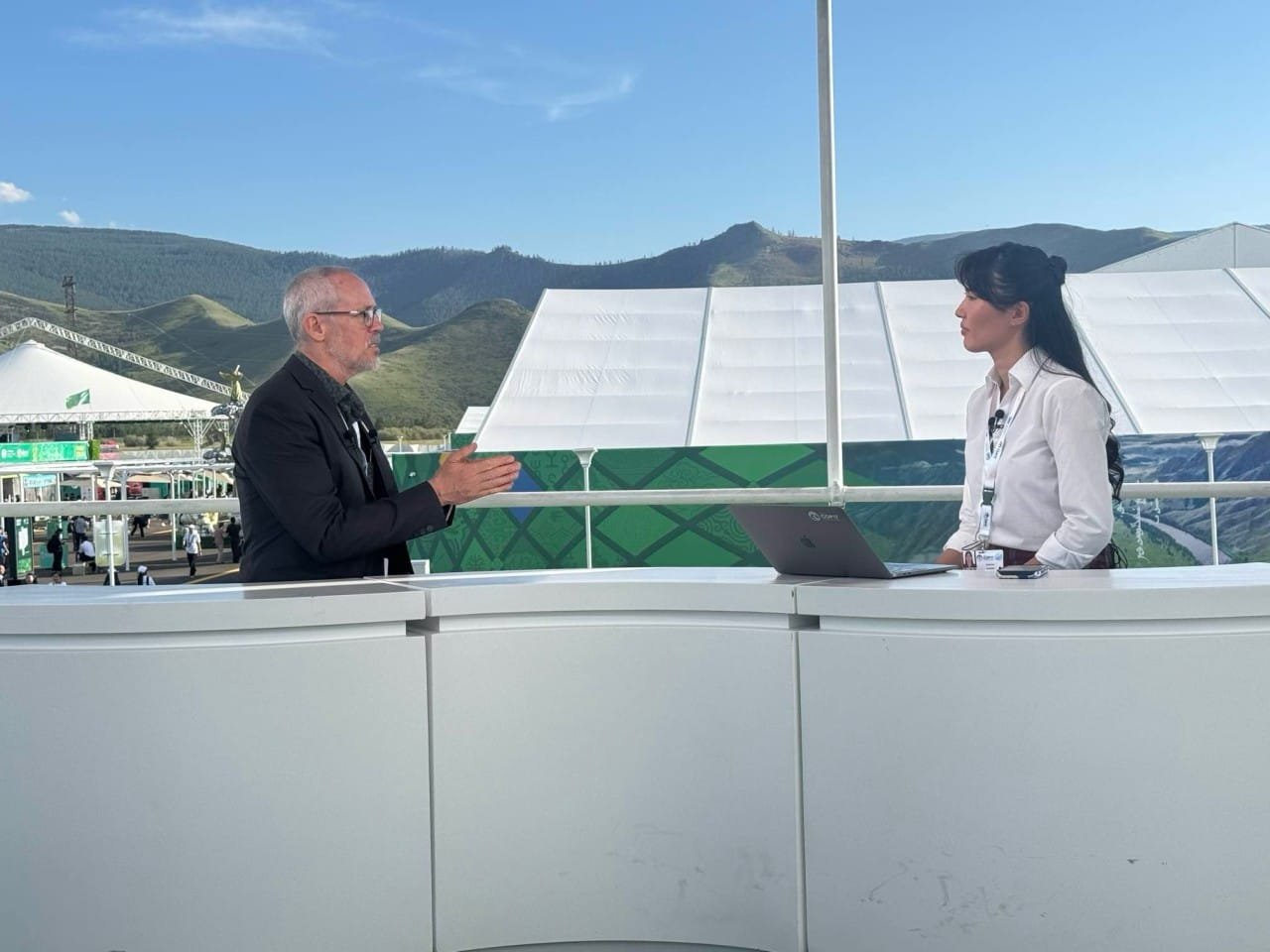
Sean Weaver being interviewed on-site at COP17 in Ulaanbaatar, Mongolia.
The article highlighted Ekos’s BioCredita program, currently supporting biodiversity credit projects across Mongolia, the U.S., Australia, the Cook Islands, Uganda and New Zealand — including a new project in western Mongolia to ease grazing pressure on the steppe and restore habitat for rare horse breeds. OPIS also covered Sean’s comments on using finance to help herders reduce goat numbers without bearing the full financial cost, with biodiversity credit revenue helping offset that risk.
Read the full article on OPIS: Modest Claims Could Unlock Private Finance, Ekos CEO Says at Mongolia COP17