
COP30 by Daniela Ramirez
NCC Senior Climate Advisor and Technical Advisor on Ekos Kamahi board.
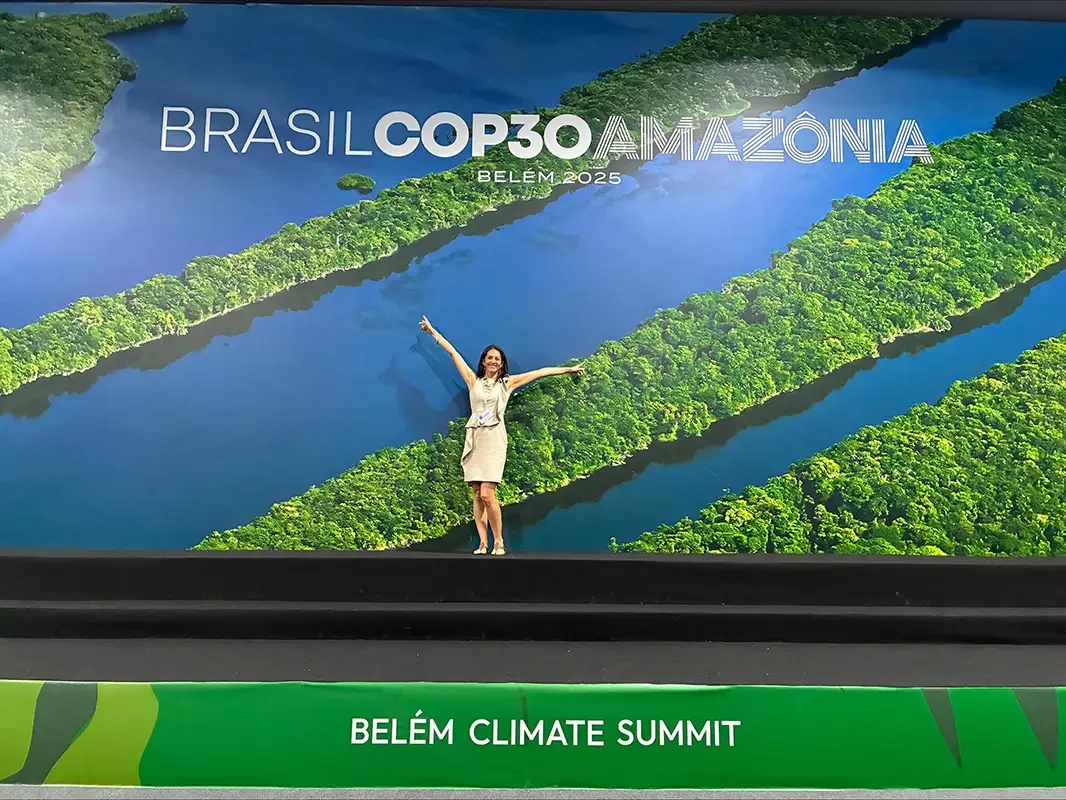
Daniela Ramirez
What initially drew you to attend COP30?
I wanted to have a high level view of what was happening internationally, and how the negotiations were done. I was motivated by the opportunity to engage with colleagues that face the same challenges, met climate leaders and explore innovative GHG mitigation solutions that I could bring back to New Zealand. I also took the opportunity to collaborate with the climate change team from Fortaleza Council by participating in the review of the fifth carbon footprint inventory and the reduction Plan for the city and I was honoured to be invited to a pre-COP event as a speaker.
The themes of energy transition, transport and carbon dioxide removals particularly resonated with me, as they align with my professional interests and the highest sources of emissions in the region where I live and work.
What were you hoping to achieve or contribute through participation?
My goal was to share perspectives from my local context. The COP30 had themes on different days with events running all day in the different pavilions. This year was the first time that had two days dedicated to local governments, so I managed to attend many events with initiatives showcased by other local governments around the world. I was also aiming to reconnect with colleagues from Chile and Australia and build my network that could lead to collaborative projects or potential funders. I could see how much is being implemented worldwide outside the policies and negotiations that were running parallelly.
What were your key takeaways or insights from the event?
I came away with a deeper appreciation for the complexity of global climate negotiations. Negotiations are, by definition, a balancing act. You never get everything you want and compromises are inevitable. No one leaves fully satisfied, but the process should deliver an equilibrium. That was my hardest lesson learnt at this COP30, as towards the end of the COP, I felt frustrated with the outcome as many other passionate professionals that were in the room. Many admitted the outcome was far from ideal, but at least it introduced language that makes fossil fuel–producing countries uncomfortable.
I also got inspired with initiatives that complement international frameworks or even don’t wait for international agreement to act.
What was the most surprising or unexpected part of your COP30 experience?
I was surprised to see how many fossil fuel lobbyist are part of the COP and it’s not hidden. CEOs and managers of petroleum companies, delegates from oil & gas producing countries, and ministers are part of the pavilions and talks offered inside the venue. They are shaping the narrative with a polished and strategic speech that conveys the following topics:
• “We are part of the energy transition.”
• “We use renewable energy for oil & gas operations.”
• “We reinvest oil & gas revenues into sustainable projects.”
This language is not accidental, it is a deliberate attempt to continue the fossil fuel production and avoid a genuine transition. I felt confronted when they mention their situation as “Our country is blessed to have oil & gas” or “we are blessed to have these natural resources, referring to fossil fuels, but not directly mentioning them”.
On a positive note, I discovered unexpected collaborations forming in real time between philanthropic organisations, local governments, NGOs and community groups attending the COP, which gave me hope that actions still are being implemented regardless of international negotiations. There were many organisations from US that despite the obvious political challenge, were present there showcasing their resilience.
Did you encounter any challenges?
Navigating the scale of the event was challenging. With so many parallel sessions, events and negotiations happening at once, it was sometimes difficult to prioritize where to invest my time. I spent the first week with a constant FOMO feeling (fear of missing out), roaming around all the pavilions scanning the QR codes and planning ahead on the topics I was interested. The negotiations were difficult to follow, as usually the text given during the day had been updated the next morning, so it was a constant change. One day the word “fossil fuel transition” was in, and the next day was not.
Talks at the pavilions of each country and organizations started at 8:00 till late. There were also events happening outside the venue, one day there were 90 events happening at the same time in the city, outside the COP venue after hours. Houses were rented by NGOs, consultants, businesses and in general any organisation that wanted to showcase their initiatives. It was a nice feeling of overwhelming and excitement.
What will you take forward into your personal and/or professional life as a result?
I have reinforced the importance of building networks, drawing inspiration from others, and reconnecting with the energy of the past few weeks whenever I feel frustrated with the pace of my own projects. I intend to implement a few initiatives I’ve learned from organizations working on mitigation opportunities. I feel more committed than ever to advocating for climate justice and advancing the energy transition in my community.
And, to keep practicing the Portuguese I’ve learned, I will read Jacinda Ardern’s book in Portuguese a copy I bought in Brazil, which she signed.
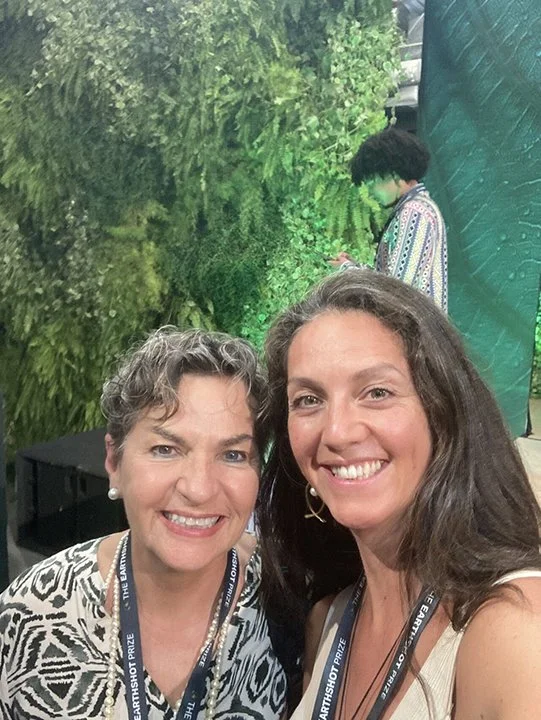
Christiana Figueres and Daniela Ramirez
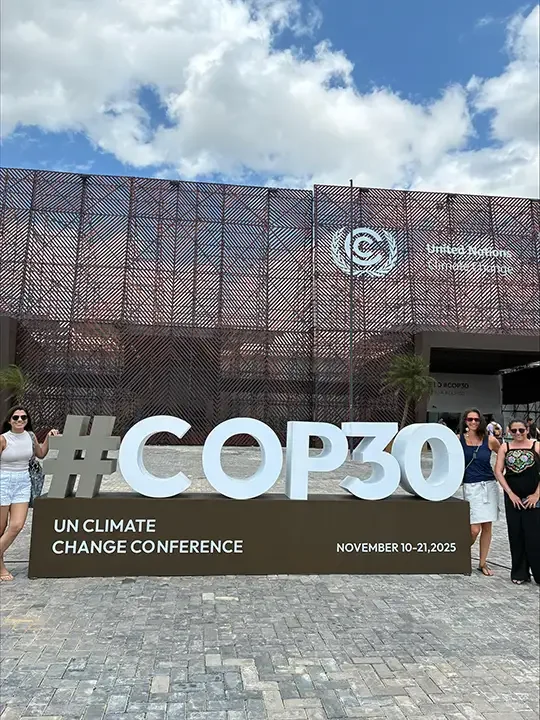
Daniela Ramirez and friends