
Ekos sold 3,500 biodiversity credits in a month, and CEO Sean Weaver says a small surcharge on everyday purchases could fund nature at scale.
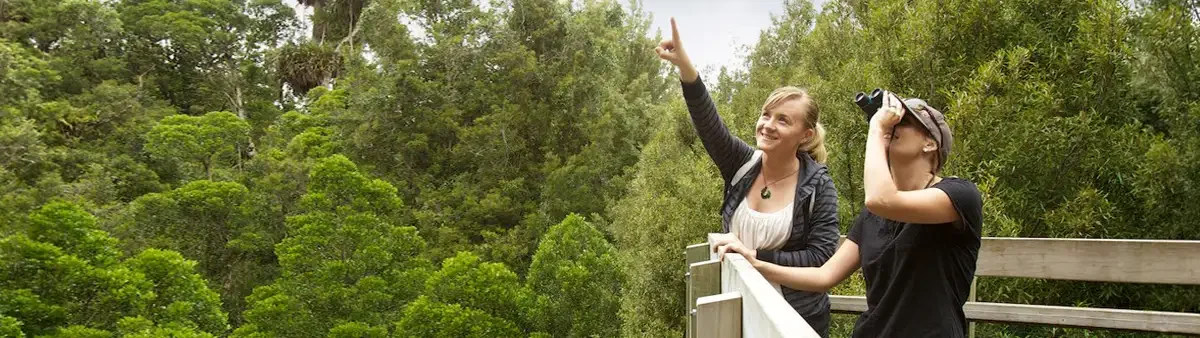
Visitors spot native birds from a lookout at Sanctuary Mountain Maungatautari
Nature markets firm Ekos has announced it sold 3,500 biodiversity credits over the last month. While the market is still young and small, buyers are gaining confidence and backing it with their wallets.
Ekos CEO Dr Sean Weaver said modest demand is to be expected in any emerging market, but each transaction helps prove that nature markets are building momentum.
“The vast majority of our sales involve embedding biodiversity credits into another value chain – in this case the carbon market value chain. We staple biodiversity credits to carbon credit transactions and give the carbon buyer the opportunity to sweeten the flavour of their carbon purchase,” he said.
Weaver said carbon is only one value chain that could use this approach. Garage Project has already sold out its recently released biodiversity beer, ‘Bush Bash’, where buyers paid a little extra for each can to support biodiversity conservation at Sanctuary Mountain Maungatautari.
“This is such a simple way of funding nature conservation – a variation on a sausage sizzle. Instead of sausages it could be beer, and in future anything: carbon credits, hotel rooms, meals, housing, cars, whiteware or petfood”
Dr Sean Weaver, CEO, Ekos
What a small surcharge could raise
Weaver said the point is to link willing buyers with high quality projects they can trust to look after our amazing country, and that the price change on a product or service can be very small. “To give one example, if carbon traders in the New Zealand Emissions Trading Scheme raised the carbon price by 0.5% for 50% of their trades as a commitment to nature, this would raise around $138,000 for every million carbon credits sold. With around 30 million carbon credits traded in this market annually, this would raise over $4 million annually for nature,” he said.
Why nature markets matter now
“The only missing part of the puzzle is our collective imagination and a willingness to actually do something for nature as an integral part of our economy,” Weaver said.
“The time for hoping that the government will solve the nature conservation financing problem is over. We need to mobilise all the tools in the financing toolbox, and nature markets are potentially the biggest,” he said.
For media enquiries, contact Sean Weaver, CEO, Ekos.